Prime Minister’s Political Assistant Rashed Khan has accused Jamaat-e-Islami of secretly colluding with the banned Awami League and India in an attempt to create unrest in the country.
He said the party’s repeated announcements of long march programmes were part of the conspiracy, adding that Jamaat could even reach an understanding with its political rivals when it served its interests.
“Jamaat is making a desperate attempt, in collusion with India, to bring back the Awami League in December. The language of the Awami League and the statements of the Jamaat ameer are essentially the same,” he said.
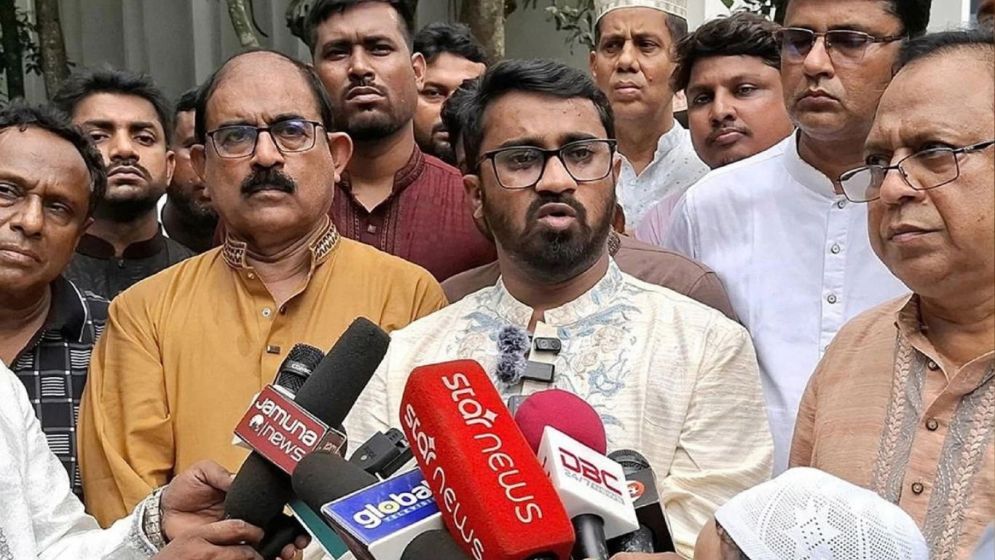
Rashed Khan made the remarks while responding to questions from journalists on Friday afternoon after Juma prayers at the Siddiqiya Kamil Madrasa premises in Jhenaidah.
He said the electricity and gas crisis was a national problem that required constructive cooperation from both the government and the opposition.
“Instead, opposition parties, including Jamaat, are announcing long marches over this national crisis. After Chattogram, a long march towards Rangpur has been announced,” he said, questioning whether such long marches could actually resolve a national problem like the gas and electricity crisis.
Rashed Khan said it was regrettable that Jamaat was trying to forge an alliance with the Awami League instead of cooperating with the government at a time when the government was maintaining an anti-India and anti-hegemony stance.
He urged the people to remain alert about such developments.
He also said Prime Minister Tarique Rahman’s proposed visit to India would not be considered until fugitive former prime minister Sheikh Hasina and those involved in the killing of Inquilab Mancha leader Osman Hadi were brought back from India.
“Only after these two demands are met can the government consider the prime minister’s visit to India,” he said.
Rashed Khan said Bangladesh’s foreign policy was now completely independent and that decisions would be made by prioritising national interests and sovereignty rather than under pressure or influence from any country.
On relations with neighbouring countries, he said Bangladesh would base its foreign policy on mutual respect and national interests.
“The government will take decisions on foreign policy by prioritising the country’s sovereignty and the interests of its people,” he said.
Jhenaidah Sadar upazila BNP President Advocate Munsi Kamal Azad Pannu, Shop Owners’ Association President and BNP leader Anwarul Islam Badsha, district BNP Joint Secretary M Shahjahan Ali, former district Jatiyatabadi Chhatra Dal president SM Aminuzzaman Samin and district Jatiyatabadi Chhatra Dal President Imran Hossain, among others, were present.
Comment
Design & Developed by: BD IT HOST


 |
12 Septembertember, 2026
|
12 Septembertember, 2026