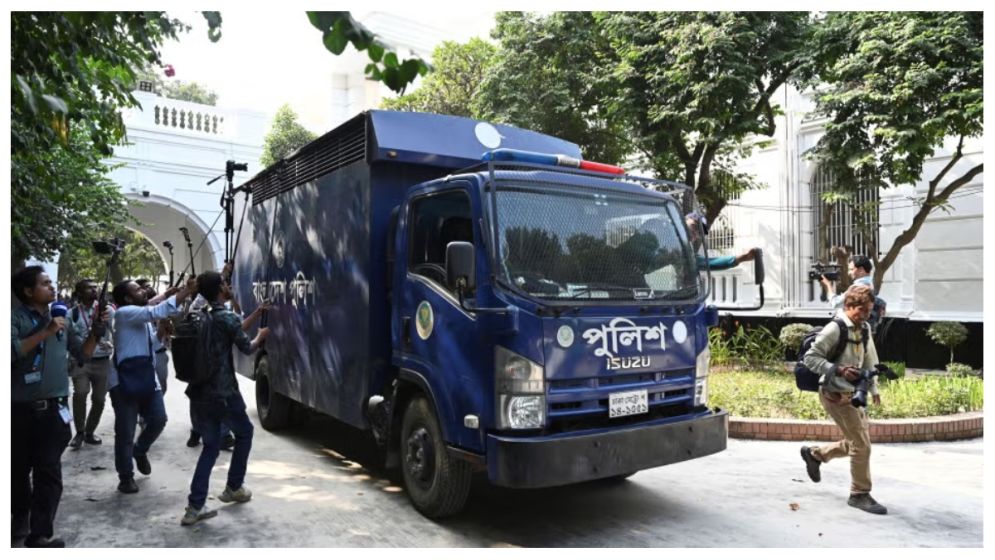
Human Rights Watch (HRW) has urged the Bangladesh government to immediately end the prolonged pre-trial detention of politicians and others linked to the ousted Awami League government, calling for fair trials, respect for the presumption of innocence and independent investigations into deaths in custody.
In a statement published on Sunday, the international rights organisation said thousands of Awami League officials, activists and supporters were detained after Sheikh Hasina was forced to step down as prime minister in August 2024 following weeks of protests. It said hundreds remain in prison without being charged with any crime.
HRW acknowledged that some officials may have been involved in serious human rights violations under the Hasina government. However, it said many others had been arrested without apparent evidence on allegations of murdering protesters.
The organisation said families and lawyers of detainees, many of whom are elderly or suffer serious health problems, have alleged that they have been denied basic rights, including bail and adequate medical treatment.
According to HRW, at least 10 Awami League office-bearers, most of whom had not been charged with any crime, have died in prison since Prime Minister Tarique Rahman took office in February 2026.
“Under one government after another, hundreds of opposition members have been locked up without evidence or due process,” said Elaine Pearson, Asia director at Human Rights Watch.
“The government of Prime Minister Tarique Rahman has pledged reform, and as a first step he should end the prolonged arbitrary detention of political opponents,” she said.
Bail repeatedly blocked
HRW alleged that prosecutors have repeatedly sought to prevent detainees from securing bail even in cases where no evidence has been produced.
It said lower magistrate and district courts have consistently rejected bail applications, while High Court bail orders have allegedly been circumvented when authorities file fresh cases against detainees.
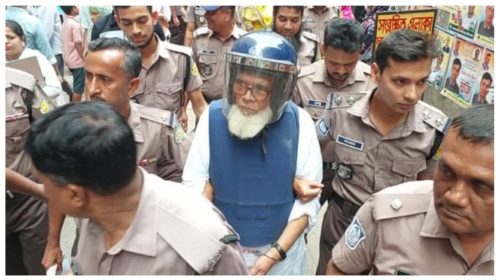
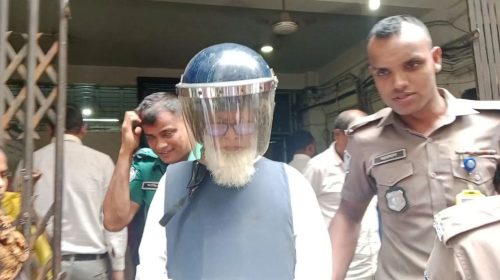
The rights organisation cited the case of ABM Khairul Haque, 82, a former chief justice, who was arrested on July 24, 2025, over an allegation that he murdered a protester.
Over the next three months, he was arrested in four additional cases, including corruption allegations. Lower courts rejected his bail applications, despite his family’s claim that he was in poor health and had suffered a heart attack in prison.
Although the High Court granted bail in the cases, police filed two new cases against him on March 10, 2026, preventing his release.
The lower courts again refused bail, while the High Court granted it on May 12. Before Haque could be released, however, police filed another murder case.
HRW said authorities alleged that Haque was present at a murder scene at exactly the same time as an earlier alleged murder, despite the two locations being more than 10 kilometres apart.
The process was repeated, with the High Court again granting bail and police filing another case. Haque was finally released on August 19 following intervention by the Appellate Division.
HRW said that throughout the period, Haque had not been formally charged with any offence.
Lawyers representing other detainees told the organisation that they have started advising clients not to seek bail because police may file new cases against them if they are successful in obtaining release.
Concerns over International Crimes Tribunal
HRW also raised concerns about prolonged detention by Bangladesh’s International Crimes Tribunal, a domestic court responsible for prosecuting international crimes.
The organisation said the tribunal allows detention without charge beyond one year only in “exceptional circumstances” that must be set out in writing. However, it said the tribunal has not granted bail to any of more than 160 people it has detained, while detainees have no right to appeal bail rejections.
Dr Tawfiq-e-Elahi Chowdhury, 81, a former adviser to the Hasina government, was first detained by the tribunal in October 2024 and has spent 22 months in custody without charge, HRW said.
When he sought bail in April 2026, the tribunal neither granted bail nor specified any exceptional circumstances, according to the organisation. Proceedings were instead adjourned twice, most recently until the end of August.
Former parliament member Kamal Ahmed Majumder, 75, has also spent 22 months in detention, HRW said. His family told the organisation that he developed gangrene in his foot, requiring the amputation of three toes, and later suffered a broken hip in a fall. The tribunal rejected his bail application in July.
HRW also highlighted the cases of 75-year-old activist Shahriar Kabir, who suffers from chronic health problems and requires a wheelchair, and former lawmaker RAM Obaidul Muktadir Chowdhury, 71, who has spent 22 months in detention without charge and has serious heart problems.
HRW raises concerns over prison deaths
The rights organisation said concerns over inadequate medical treatment had also emerged in cases involving detainees who later died in custody.
Ramesh Chandra Sen, 85, a former Awami League lawmaker, was arrested in August 2024 in three murder cases and an explosives case. He remained in detention until his death on February 7, 2026.
His family alleged that he was denied proper medication and refused bail.
HRW also cited the death of SM Ziaul Haque Zia, 65, a Jamalpur district Awami League leader who was already in poor health when he was detained on January 6. He died on April 14 after being denied bail, according to the organisation.
Human rights law and pre-trial detention
HRW said international human rights law permits pre-trial detention in certain circumstances, but stressed that it should be an exception rather than the rule.
It said detention should be assessed on an individual basis, with a judge or equivalent authority reviewing the legality and necessity of each detention. Anyone held before trial should be entitled to a speedy trial or release, while restrictions must comply with the right to liberty, the presumption of innocence and the principle of equality.
HRW also criticised a proposed new National Human Rights Commission law, saying that if adopted in its current form, it could prevent the commission from investigating allegations of arbitrary arrest.
“A justice system that lets older people die in custody before they are ever charged is not treating pretrial detention as the exceptional measure it always should be,” Pearson said.
“The Bangladeshi government should order independent inquiries into all prison deaths under its watch and stop arbitrarily detaining people for prolonged periods without charge,” she added.
Comment
Design & Developed by: BD IT HOST


 |
24 Augustust, 2026
|
24 Augustust, 2026