Sweden’s parliamentary election remained too close to call on Monday as vote counting continued, but the centre-left opposition appeared on course to form the next government, holding a narrow three-seat lead over the right-wing ruling bloc after most votes from Sunday’s election had been counted.
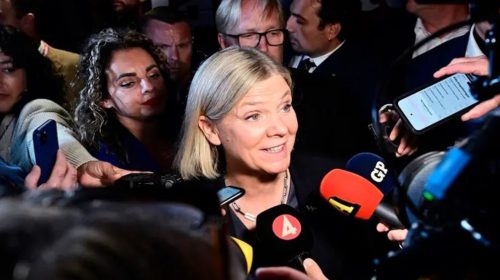
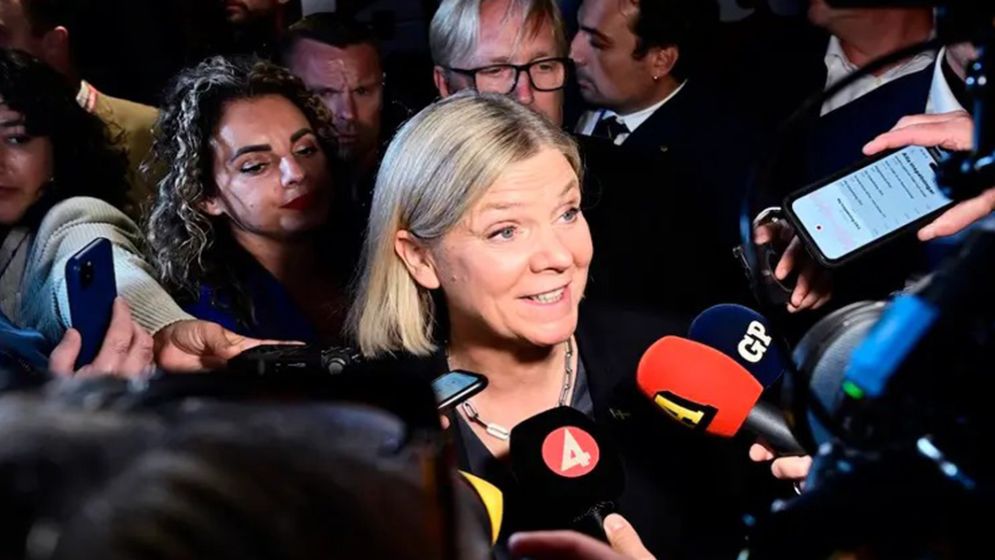
Swedish Social Democratic Party leader Magdalena Andersson told supporters on Sunday that the opposition was leading the count and said that if the result held, “Sweden will get a new government.”
The centre-left bloc, led by Andersson, was projected to win 176 of the 349 seats in parliament, while Prime Minister Ulf Kristersson’s right-wing bloc was projected to win 173, according to Sweden’s election authority.
The latest figures were based on results from 6,195 of the country’s 6,312 electoral districts. The two blocs were separated by just 0.45 percent of the vote on Monday morning.
However, party leaders remained cautious about declaring victory or conceding defeat. Results from 353 districts were still to be counted, while overseas votes are not expected to be fully tallied until Wednesday.
The uncertainty is significant given the 2022 election, when early exit polls initially indicated a narrow centre-left victory before the final result gave Kristersson’s bloc enough support to form a government. Kristersson showed no sign of conceding defeat after Sunday’s election.
The Sweden Democrats, which has supported Kristersson’s government from outside the coalition since 2022, were projected to lose around 11 seats. The party had hoped to enter government for the first time if the right-wing bloc retained power.
The party also saw a decline in its vote share. It was projected to receive 17.2 percent, down from 20.5 percent in the 2022 election. If confirmed, it would be the first time the party has lost ground in a parliamentary election since entering parliament in 2010.
If the centre-left lead is confirmed, Andersson is expected to return as prime minister, but forming a government could take time.
The Centre Party has refused to share power with the Left Party, while the Left Party has said it must be part of any coalition. Parliament Speaker Andreas Norlén told Swedish television that forming a government could be a complicated process.
The election result is unlikely to significantly change Sweden’s pro-Western and pro-Ukraine foreign policy. Its impact on immigration and economic policy, however, remains less clear.
Andersson has promised increased welfare spending, a fairer tax system and greater focus on social cohesion. The Greens and Left Party have called for higher contributions from wealthy Swedes, while the Centre Party opposes a tax on billionaires.
On immigration, Andersson has indicated that the Social Democrats are unlikely to support major changes to Sweden’s current restrictions, despite calls from the Left and Green parties for a softer approach.
The final result will depend on the remaining district and overseas votes before Sweden’s election authorities complete the official count.
Comment
Design & Developed by: BD IT HOST


 |
16 Septembertember, 2026
|
16 Septembertember, 2026