Timely and effective vaccination, not intensive care or ventilators, can prevent the spread and deaths caused by highly contagious diseases such as measles, State Minister for Health Dr MA Muhit said on Wednesday.
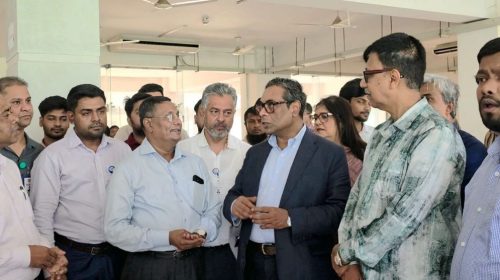
He made the remarks while addressing a workshop on “Measles spread and genomic surveillance” and a research grant award ceremony at Bangladesh Shishu Hospital and Institute in Sher-e-Bangla Nagar, Dhaka, this morning.
The hospital’s Department of Epidemiology and Research and icddr,b jointly organised the event, where researchers presented findings on the spread and genetic characteristics of measles.
Dr Muhit said delays in taking timely action and policy lapses during the 2024 vaccination programme had created an immunity gap that contributed to the current measles situation.
“Thousands of ventilators or ICU beds cannot stop this trend of deaths. Vaccination remains the most effective way to prevent measles,” he said.
Rejecting unrealistic assurances, the state minister said even if the authorities doubled the pace of vaccination, they could need another two to three months to bring the current outbreak fully under control.
He said the government was providing the highest level of treatment and strengthening field-level surveillance to reduce child deaths during this period.
Dr Muhit also outlined plans to decentralise child healthcare, saying five newly built full-fledged children’s hospitals in five divisional and district cities would officially begin providing services by October.
The government is also upgrading every 50-bed upazila health complex to 150 beds to strengthen healthcare at the grassroots, he said. The facilities will prioritise paediatrics, medicine, surgery and gynaecology.
The state minister said the government would recruit around 100,000 new health workers to expand primary and maternal and child healthcare services.
He also said the government would soon recruit 5,000 new doctors and gradually recruit nurses and medical technologists based on demand to address the ongoing manpower shortage.
The ministry is also working to bring the doctor-to-nurse-to-medical-technologist ratio in line with international standards, he said.
Dr Muhit said the management models of autonomous but government-supported institutions such as Bangladesh Shishu Hospital, BIRDEM and Holy Family could offer an effective and balanced model for the health sector.
He said limited specialised healthcare facilities outside Dhaka forced patients from across the country to travel to the capital, exposing a structural weakness in the national healthcare system.
The government will gradually establish specialised healthcare facilities of a standard comparable to those in Dhaka in every divisional city, he added.
Director General of the Directorate General of Health Services Prof Dr Prabhat Chandra Biswas, Director (Hospitals) Dr Md Nurul Islam and IEDCR Director Dr Kazi Ahmed Zaki also spoke at the event.
Bangladesh Shishu Hospital and Institute Chairman Prof Dr AKM Azizul Haque chaired the programme.
Prof Dr Mirza Md Ziaul Islam of Bangladesh Shishu Hospital and Institute and Dr Mustafizur Rahman, chief scientist of the Virology Department at icddr,b, jointly presented the key research findings and data.
The research found that a new strain of the virus did not cause the measles outbreak that spread in Bangladesh in 2026. Instead, the highly contagious B3 strain, which circulates globally, combined with vaccination gaps and declining maternal antibodies, contributed to the outbreak.
The study also found that maternal immunity declines rapidly before children reach nine months of age. Alongside gaps in routine vaccination, this leaves malnourished children aged six to nine months at higher risk of measles infection and death.
Comment
Design & Developed by: BD IT HOST


 |
19 Augustust, 2026
|
19 Augustust, 2026