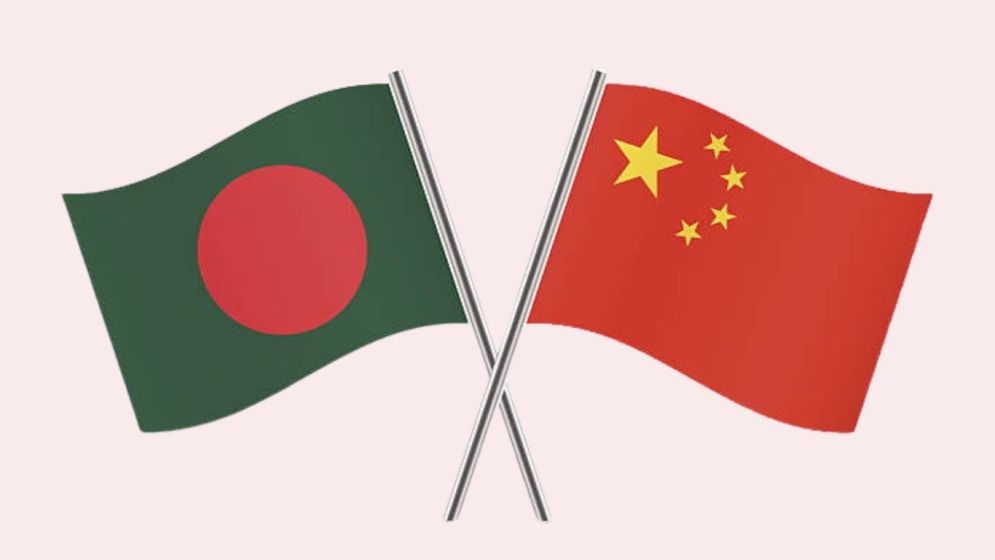
Bangladesh’s relationship with China has entered a new phase. Following the BNP’s return to power, Prime Minister Tarique Rahman’s June visit to Beijing produced an extensive package of agreements covering infrastructure, trade, education, healthcare, defence and party-to-party cooperation. Closer ties with the world’s second-largest economy are not unusual. But the speed and breadth of the new engagement raise important questions about how Bangladesh can maximise the benefits while safeguarding its own strategy.
Among the more significant outcomes was a memorandum of understanding between the Bangladesh Nationalist Party and the Communist Party of China (CPC). Unlike conventional state-to-state diplomacy, such agreements create direct links between political parties. Through its International Department, the CPC has long cultivated these relationships worldwide as part of Beijing’s broader diplomatic outreach. Researchers have also highlighted the role of the United Front Work Department in expanding China’s engagement with overseas communities, academic institutions and civil society organisations.
Education has become another important pillar of bilateral relations. Bangladesh already hosts Confucius Institutes at several universities, with additional centres planned under recent agreements. These institutes provide language training, scholarships and academic exchanges that benefit many Bangladeshi students. At the same time, they have drawn scrutiny in several democracies.
The media landscape is evolving in a similar direction. China Media Group (CMG), China’s state broadcaster, has steadily expanded its engagement with Bangladeshi media through content-sharing agreements, journalist exchanges and cooperation with local broadcasters. Such partnerships are common in international media diplomacy, but they also provide Beijing with greater opportunities to project its narratives abroad.
China’s growing role is equally visible in infrastructure. The expansion of Mongla Port, the proposed Chinese Industrial Park nearby, and the Chinese Economic and Industrial Zone in Chattogram promise investment, employment and improved connectivity. These projects could contribute significantly to Bangladesh’s development if managed prudently. Yet experience elsewhere suggests that transparency, competitive procurement and careful debt management are essential for ensuring that long-term national interests are protected.
Economic dependence is another issue that deserves attention. Bilateral trade now exceeds $24 billion annually, but Bangladesh exports only a small fraction of that amount to China. Future negotiations should therefore focus not only on attracting investment but also on improving market access for Bangladeshi goods and addressing the widening trade imbalance.
None of this argues against stronger ties with China. Bangladesh needs investment, technology and diversified economic partnerships, and China can make an important contribution. But successful partnerships are built on transparency, accountability and balanced negotiation.
As Dhaka deepens its engagement with Beijing, the most important question is whether Bangladesh will protect its own with equal clarity, confidence and foresight.
Comment
Design & Developed by: BD IT HOST


 |
29 July, 2026
|
29 July, 2026