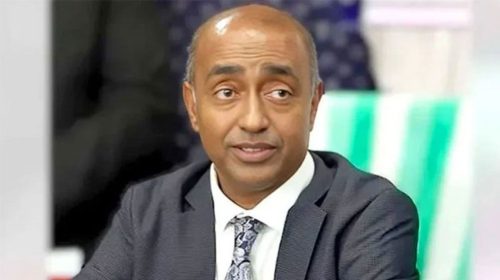
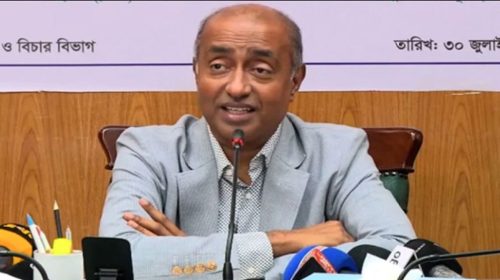
The government is taking a new project to upgrade Bangladesh’s nursing and midwifery professions, with support from the Asian Development Bank (ADB), aiming to improve nursing education, develop a skilled health workforce and increase overseas employment opportunities, Prime Minister’s Special Assistant on Health Affairs Dr SM Ziauddin Hyder said on Wednesday.
Dr Ziauddin, made the remarks while briefing journalists on his recent Philippines study visit on health workforce at the secretariat.
He said Bangladesh currently earns around $32 billion to $33 billion annually from remittances and aims to increase the figure to $100 billion within the next two to three years.
“We will be able to achieve this target if we can properly regulate professional bodies in the health sector and develop skilled healthcare professionals,” he said.
The special assistant said the ADB supported Bangladesh’s engagement with the Philippines and facilitated meetings in Manila as part of efforts to strengthen cooperation in health workforce development.
During the visit, the Bangladeshi delegation held meetings with the ADB vice-president responsible for the region and the bank’s director general, he said.
“The main objective of the meetings was to explore collaboration between Bangladesh and the Philippines to improve the quality of nursing education and secure financial, technical and global knowledge support,” Dr Ziauddin said.
He said the ADB had agreed in principle to assist Bangladesh in preparing a project during 2026–27 and provide financing for its implementation.
The bank is currently considering around $150 million in financing for the project, which will initially focus on approximately 73 government nursing colleges and institutes across the country, he added.
Under the proposed project, the government plans to revise the existing content-based nursing curriculum and transform it into a competency-based curriculum by drawing on the Philippines’ experience.
The initiative will also focus on modernising classrooms with audio-visual and other advanced teaching equipment, establishing skills laboratories and simulation laboratories at nursing colleges, and improving the capacity of faculty members.
“Modern equipment and simulation facilities can make a significant contribution to nursing education. At the same time, our existing faculty members will need further training to teach the revised curriculum and operate the new facilities,” he said.
Dr Ziauddin said Bangladesh-Philippines cooperation would be incorporated into a formal project, which would be jointly supported by the ADB and the Bangladesh government.
“We hope that within the next few years, we will be able to bring about visible changes in the quality of nursing education and the professional standards of nurses in Bangladesh,” he added.
He said the government was committed to taking the country’s nursing and midwifery professions to a higher level as part of broader reforms in the health sector.
“Prime Minister Tarique Rahman is committed to comprehensively reforming Bangladesh’s health sector,” he said.
Dr Ziauddin said the country would not be able to establish an effective healthcare system capable of addressing the health challenges of both present and future generations without improving the standards of nursing, midwifery and other health professions.
He said healthcare professions that had remained comparatively underdeveloped including nursing, midwifery, health technology, paramedical services, pharmacy and pathology must be brought under clearly defined professional standards.
“If we cannot raise these professions to an appropriate standard, we will never be able to build a proper healthcare system for Bangladesh,” he said.
Comment
Design & Developed by: BD IT HOST


 |
30 July, 2026
|
30 July, 2026