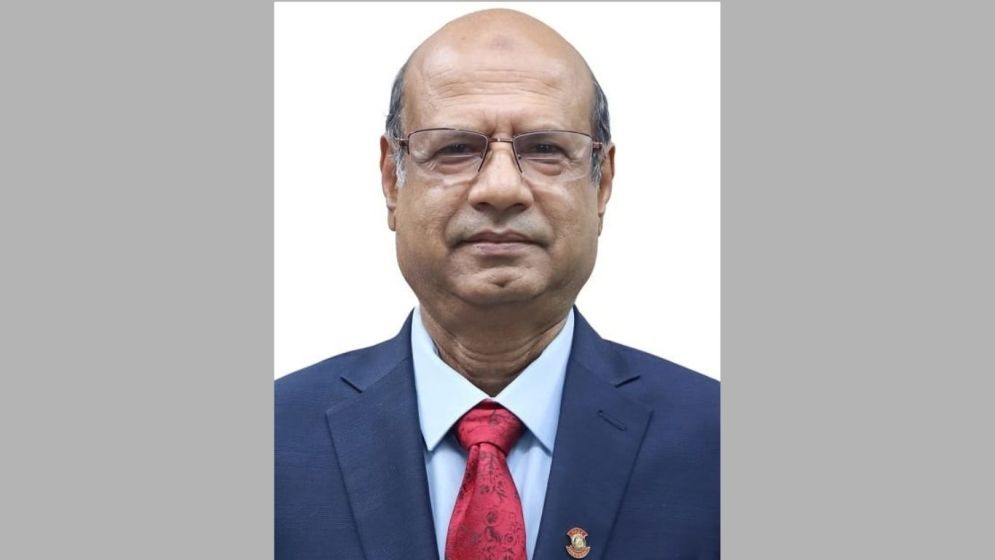
Unplanned urbanisation in Dhaka cannot be prevented unless the influx of people into the capital is addressed, said Rajdhani Unnayan Kartripakkha (Rajuk) Chairman Engr Md Riazul Islam.
Speaking at the Smart City Conclave 2026 organised by Bonik Barta, he said urban planning must reflect Bangladesh’s realities rather than replicate models from Europe, America or Australia.
“Every day, we hear that people are coming to Dhaka and settling in slums. If we cannot stop the influx of people into the city, how can we prevent slums? Can you stop them through laws?” he asked.
He stressed the need to establish the actual population of the Detailed Area Plan (DAP) zone, which covers Dhaka and parts of surrounding areas, including Narayanganj. While estimates range from 20 million to 30 million, the actual population and the number of people the area can accommodate remain uncertain, he said.
Riazul said the goal should be to build a liveable Dhaka where residents can access at least basic facilities, rather than focus solely on making the city “smart”.
He said a smart city requires coordinated transport, healthcare, sanitation, education and public transport systems, many of which fall under authorities and ministries other than Rajuk.
“Rajuk prepares plans, including the DAP. On paper, the DAP is a good plan. But in reality, it is like a cow that exists in the records but not in the cowshed,” he said, describing the gap between planning and implementation.
As an example, he said a 10-storey building had been constructed illegally on a site designated as a waterbody in the DAP.
Unless the relevant authorities integrate their activities and work together, the city’s problems will remain unresolved, he added.
Long-term planning and implementation
Riazul said he attended a training programme on transit-oriented development (TOD) in Tokyo in May 2025, shortly after becoming Rajuk chairman. Japan began implementing the approach in 1950, and work remains ongoing, including in Tokyo, he said.
He contrasted Japan’s approach with Bangladesh’s, saying Bangladesh often makes plans for five years but takes 25 to 30 years to implement them, while Japan plans for 20 years and seeks to implement those plans within five years.
Rajuk has begun TOD initiatives in two areas — Gabtoli and Uttara — he said.
He also attributed Dhaka’s poor urban conditions partly to a widespread reluctance to follow laws and regulations.
Islam said he frequently faced requests from influential people to overlook violations of building regulations. In some cases, people who complained about violations by others had even greater deviations from approved plans in their own buildings, he added.
Rajuk lacks manpower for effective monitoring
The Rajuk chairman said the authority had around 1,200 employees in total, from officers to support staff, while its inspection team comprised only about 100 inspectors.
Given Dhaka’s population and the number of buildings in the city, effective monitoring was difficult with such limited manpower, he said.
He stressed that building regulation could not depend solely on enforcement and inspections. A culture of compliance with laws and regulations was also essential.
Rajuk approves building plans submitted by architects and engineers; it does not prepare the plans itself, Islam said. Developers and individual owners must construct buildings in accordance with the approved designs, he added.
He said architects and developers must take responsibility for ensuring that construction follows approved plans, while Rajuk would continue to provide oversight.
Green buildings and construction materials
Riazul said Rajuk was offering incentives to developers who construct green buildings and was incorporating solar power requirements into its approval process.
“We are making every effort, but we need your cooperation. This cannot be done by the government, Rajuk, the National Housing Authority or any other department alone,” he said.
He added that the government was reducing the use of traditional bricks in public buildings and promoting concrete blocks as an alternative. Developers would also be required to move away from conventional bricks, he said.
According to Islam, the prime minister had directed that block prices be kept low and that the Public Works Department’s schedule of rates set lower prices for blocks than for bricks. The department was working on the issue, he added.
Measures to improve earthquake safety
Addressing concerns over earthquake safety, Islam said the Bangladesh Earthquake Safety and Research Institute had been established with support from the government.
Rajuk provided the institute with land and a building free of charge, as well as an initial fund of Tk 5 crore, he said.
He also called for lower charges for detailed engineering assessments, noting that the costs at Bangladesh University of Engineering and Technology (BUET) were high.
Riazul said Rajuk was considering carrying out such assessments itself, which could introduce competition and help reduce costs.
Greater accountability in building approvals
Riazul said the building approval process had become more rigorous, requiring design engineers alongside architects.
He said professionals recognised by the Institute of Architects Bangladesh (IAB) would be held responsible for their designs and would have to certify that construction had followed the approved plans.
Rajuk would then inspect the building before issuing an occupancy certificate, he said. The arrangement would clarify responsibilities and make the process more effective.
In the past, architects could sign off on plans while buildings were subsequently constructed differently, he said, adding that some designers and architects prepared hundreds of plans every month without adequately ensuring compliance.
“This cannot continue,” he said.
Riazul concluded by urging all stakeholders to work together sincerely to build a planned and smart city.
Comment
Design & Developed by: BD IT HOST


 |
11 Octoberober, 2026
|
11 Octoberober, 2026