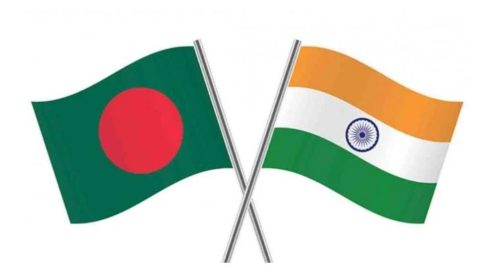
Are Bangladesh-India relations about to mark the beginning of a new era? This question has surfaced in the wake of diplomatic engagements over the past few days between the two neighboring nations. Moving past the bitterness of the last two years, both countries are sending messages of moving forward.
Dinesh Trivedi, the Indian High Commissioner to Bangladesh, has conveyed Dhaka’s message to Indian Prime Minister Narendra Modi regarding the creation of a “conducive environment” to advance bilateral ties. Following a series of meetings with top government leaders in Bangladesh, including Prime Minister Tarique Rahman, Dinesh Trivedi met Narendra Modi in Delhi on Tuesday to discuss the matter. This holds immense significance.
This event alone demonstrates India’s strong interest in normalising relations with Bangladesh.
The High Commissioner certainly discussed several sensitive issues affecting bilateral relations with the Indian Prime Minister. Upon his return to Dhaka, Dinesh Trivedi is expected to convey India’s willingness to take relations forward based on Modi’s directions.
On Tuesday evening, while Dinesh Trivedi was briefing the Indian Prime Minister at the Indian Parliament premises about his discussions with Bangladesh’s Prime Minister, Foreign Minister, and Home Minister, Randhir Jaiswal, the spokesperson for India’s Ministry of External Affairs (MEA), shared a key update. He announced that Bangladesh Prime Minister Tarique Rahman has been invited to India both for a bilateral visit and to participate in the outreach segment of the upcoming BRICS summit in his capacity as the BIMSTEC Chairperson. The Bangladesh issue received special priority during this weekly briefing.
While discussions regarding Bangladesh are taking place in India, Dr Zahed Ur Rahman, the Information Adviser to the Prime Minister, stated that Bangladesh’s relationship with India needs to be “realigned.” He noted that while neighbors cannot be changed, friends can be. Therefore, relations with India will remain, but they must be built on the foundation of mutual interest and respect as independent, sovereign, and self-respecting nations.
There is a striking alignment between the statement of the Information Adviser and the remarks of the Indian High Commissioner to Bangladesh. Ever since assuming his role, the high-profile Indian envoy has consistently emphasised the message of improving people-to-people ties between the two countries. However, diplomatic relations cannot rely solely on pleasant words; advancing this relationship requires mutual trust, confidence, and concrete positive steps. Bangladesh-India relations are currently stalled over several unresolved issues. Resolving these through dialogue while safeguarding mutual interests is crucial. At this moment, particular attention must be paid to several key areas to improve bilateral relations.
First, the most critical issue currently affecting bilateral relations is the Ganges Water Sharing Treaty. Signed in 1996, this treaty governs the sharing of the largest common river between the two nations. Its duration ends in December this year. Securing a new agreement before its expiration is vital for Bangladesh. Both countries have already initiated talks on this matter, and it is hoped that a honorable solution for both sides will be reached through dialogue. However, it must be noted that the flow of water has decreased due to reduced navigability in the Ganges. Water flow is not normal not just in the Ganges, but across many rivers flowing through both countries. Here, activating the Joint River Commission (JRC) to conduct long-term surveys and research is necessary. Water sharing is not merely a single-river issue; both nations must work together to find a scientific solution for the broader problem.
Second, the Teesta Water Sharing Accord has remained stalled for a long time. The treaty could not be implemented primarily due to objections from Mamata Banerjee. With the BJP currently in power in West Bengal, swift implementation of this agreement is necessary. In 2011, the draft Teesta agreement was prepared by both countries, stipulating that India would receive 37.5% and Bangladesh 42.5% of the water during the lean season. However, West Bengal Chief Minister Mamata Banerjee opposed the treaty, citing internal water demand. Bangladesh is currently awaiting the implementation of this agreement. It must be remembered, however, that any consensus regarding the Teesta River must be made by Bangladesh directly with India. Pursuing a “Teesta Comprehensive Development Project” in a manner that creates mistrust and bitterness between the two nations would not be wise.
Data from the Joint River Commission provides a sense of how drastically the water flow of the Teesta has decreased due to the construction of the Ghazoldoba barrage in India. Without removing all obstacles to upstream Teesta water flow, implementing a major project inside Bangladeshi territory will not solve the Teesta water crisis.
Third, Bangladesh shares 54 common rivers with India. Apart from the Padma and the Kushiyara, there are no water-sharing treaties for any of these rivers. Relying solely on the Teesta Barrage or executing a mega-project will complicate issues with other rivers. Overall, Bangladesh stands to lose more than it gains from such an approach. Therefore, a dignity-preserving path to water sharing must be negotiated through dialogue, and India must be genuinely sincere in this regard.
Fourth, India needs to make a prompt and clear decision regarding individuals who have fled to India from Bangladesh. During Tuesday’s routine briefing, the Indian MEA spokesperson mentioned that the issue of former prime minister Sheikh Hasina is under review. Setting the case of Sheikh Hasina aside, India must take a clear stance regarding the remaining fugitives who have been residing there day after day. Accused of various offenses, these individuals have taken refuge in locations such as Kolkata, living lavishly. To normalise relations with Bangladesh, India must take a firm decision regarding these more than one thousand fugitives.
Fifth, border tensions between Bangladesh and India must be reduced. Both countries need to sit at the negotiating table to address border killings and push-ins. Unilateral actions will stand as an obstacle to normalising relations.
Sixth, since August 2024, hostile activities against each country from within the other’s borders have increased. This poses a threat to the security, independence, and sovereignty of both nations. Just as some individuals residing in India are spreading propaganda and conspiring against Bangladesh — engaging in activities against an elected government — anti-India sentiment is also being fueled inside Bangladesh. Both nations must commit to ensuring that their soil does not become a safe haven for separatists.
Seventh, commercial and economic ties between the two countries must be strengthened. Much like other neighboring nations that collaborate economically for mutual benefit, Bangladesh and India should enhance cooperation in trade facilitation and other sectors. Following the assumption of power by the Yunus administration, India imposed restrictions on Bangladesh, including access to certain ports. A democratic government chosen by the people is now established in Bangladesh. India should unilaterally withdraw these imposed restrictions.
There is no doubt that India is interested in normalising relations with Bangladesh. India has appointed a veteran politician as its High Commissioner to Bangladesh. Holding ministerial status, the High Commissioner has repeatedly emphasised advancing bilateral relations through dialogue. Bangladesh is also prepared to move beyond the rigid diplomatic approach of the previous Yunus administration, adopting a “Bangladesh First” diplomatic philosophy to take relations forward with India. India is a historic friend of Bangladesh, with bonds forged during the Liberation War. Both nations are interdependent. Smooth relations between Bangladesh and India are beneficial for both neighbors. Above all, there is no alternative to a normal relationship with one’s neighbor. Both sides must be sincere in achieving this. A new journey in relations can begin through mutual respect, dignity, and trust.
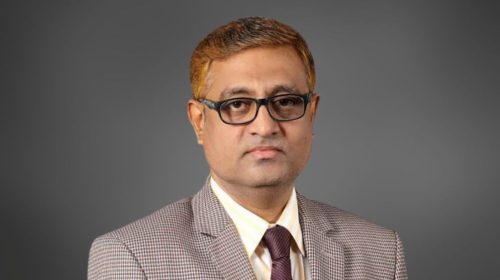
The writer is a playwright and can be contacted at auditekarim@gmail.com
Comment
Design & Developed by: BD IT HOST


 |
12 Augustust, 2026
|
12 Augustust, 2026