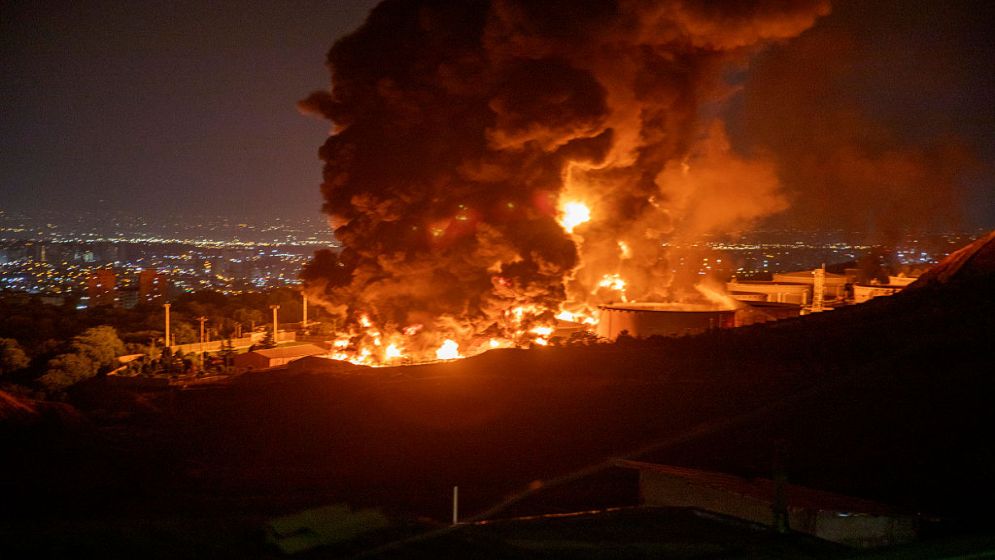
Escalating hostilities between the United States and Iran could reignite inflation, drive interest rates higher and knock global growth back to as low as 1.3%, down from 2.9% last year, World Bank chief economist Indermit Gill told Reuters.
Gill, who retires at the end of August, said the bank had modelled three outcomes in its June economic forecast given the high uncertainty surrounding the war in the Middle East, but the worst-case scenario with hostilities lasting six months or more has already come close to materializing, he said in a late Tuesday interview. Under that scenario, global headline inflation would reach 4.5%.
Prolonged fighting and damage to the region’s oil infrastructure would also deepen food insecurity by disrupting shipments of fertilizer, helium and sulphur needed in agriculture, setting off a chain of secondary effects that could include higher interest rates, Gill said.
His comments were the first by a senior World Bank official since a sharp rise in tensions between Washington and Tehran and the collapse of an April ceasefire agreement that had fuelled hopes of a less severe impact from the conflict.
The war escalated this week with U.S. forces bombing targets in the south and west of Iran, and Tehran hitting U.S. sites in Bahrain, Kuwait and Jordan. Shipping in the Strait of Hormuz remained disrupted, and Yemen’s Iran-aligned Houthis announced a naval blockade on Saudi Arabian shipments through the Bab el-Mandeb strait leading into the Red Sea.
Gill said poor countries that had not recovered from the COVID pandemic could face greater food insecurity, while nations with high debt levels would be hit by rising borrowing costs as interest rates climbed, squeezing spending on education, health and other vital services.
“My own sense of it is, maybe we are a few months away from that, you know, because you haven’t yet started to see policy rates go up,” he said. Once inflation accelerates, it could be just months before heavily indebted countries faced grave problems meeting their debt service payments, he said.
Signs of strain are emerging. Some cash-strapped countries have asked the International Monetary Fund to augment existing loans, and Pakistan this week asked the United States for a $10 billion exchange stabilization facility, according to a source briefed on the matter.
The World Bank’s June forecast showed that 40% of low- and middle-income countries were either already in debt distress or at high risk of falling into it.
That amounts to 32 countries, but the number could increase quickly if interest rates went up, Gill said, adding that others could see their longer-term growth prospects decline even if they didn’t default on their debts.
“It’s just a slow-moving train wreck,” Gill said, noting that countries that serviced their debts would wind up draining resources from education, health and other areas needed to fuel future growth.
The average debt-to-GDP ratio for emerging market and developing countries was about 74% in 2025, well above ratios near 50-55% before the pandemic that began in late 2019, according to World Bank data. For low-income countries, the ratio was 67%, up from around 40%.
Some countries would require debt forgiveness on a case-by-case basis, Gill said.
He said the world’s largest economies – the United States, China and India – had been relatively insulated from the war’s impact, each benefiting from different sources of resilience. Developing countries, however, faced greater challenges.
The Group of 20 major economies had made progress in reforming the debt restructuring process as debt vulnerabilities mounted, but improvements had come slowly.
However, there was some good news for developing countries, Gill said, noting a new World Bank analysis of their readiness for artificial intelligence found they could benefit from the emerging technology and the productivity gains it promises.
The percentage of people in poorer countries who were likely to be affected negatively by AI was about 10%, Gill said, compared to about 30-40% in richer countries.
“So for them, AI can be a huge gain,” Gill said. “Developing countries should be much more optimistic about the effect of AI than developed countries,” he said, adding that AI could potentially help restore growth to levels not seen in decades, but probably not in this decade.
Comment
Design & Developed by: BD IT HOST


 |
29 July, 2026
|
29 July, 2026