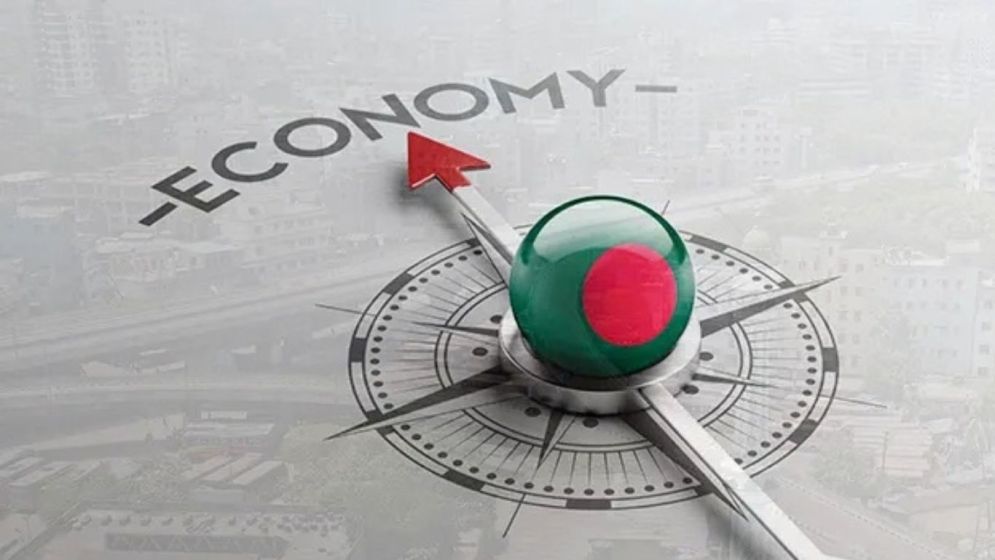
The World Bank’s latest assessment of Bangladesh’s economy has raised concerns among businesses and economists, as weak investment, falling employment, rising poverty, sluggish growth and persistent energy shortages continue to weigh on economic activity.
The report paints a challenging picture of the economy, with several key indicators showing signs of weakness. Business leaders and economists have called for urgent reforms and simpler, more investment-friendly policies to restore confidence and revive private-sector activity.
They said the government should work with all stakeholders to restructure the economy, improve the business environment and create conditions conducive to investment and employment.
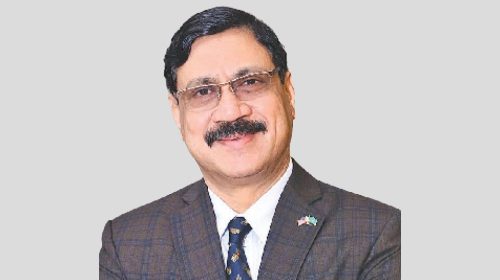
Md. Fazlul Hoque, administrator of the Federation of Bangladesh Chambers of Commerce and Industry (FBCCI) and former president of the Bangladesh Knitwear Manufacturers and Exporters Association (BKMEA), said he largely agreed with the World Bank’s assessment.
“There may be debate over the growth rate, but broadly speaking, the information the World Bank has provided on the economy and investment situation should be taken seriously,” he told the media.
He said the government should give special attention to gas and electricity supplies to increase investment and employment.
“New gas fields must be brought into use. Policy and strategic reforms are needed to increase investment,” he said, adding that sectors less dependent on gas and electricity should also receive greater investment incentives.
According to the World Bank, Bangladesh’s real GDP growth fell to 3.4% in the 2025-26 fiscal year, while growth dropped to around 2.2% in the third quarter of the fiscal year.
Growth stood at 5.8% in 2022-23. The latest quarterly figure was the lowest since the Covid-19 pandemic.
The World Bank attributed the slowdown largely to a contraction in investment. Private investment fell by 0.5 % and public investment by 0.7% in 2025-26, according to the report.
Real exports of goods and services also fell by 4.8% during the period, while implementation of the Annual Development Programme reached a record low.
Gas and electricity shortages have forced many factories to operate well below capacity, while some have reduced working hours, suspended production or laid off workers.
Former National Board of Revenue (NBR) chairman Muhammad Abdul Majid said the economic situation was disappointing, as expectations of a recovery in investor confidence and private-sector activity had not materialised.
“The investment climate is not favourable at all,” said Syed Ershad Ahmed, former president of the American Chamber of Commerce in Bangladesh (AmCham).
He said restoring law and order and political stability should be the government’s first priority.
“Investors need guarantees that everything is running smoothly and that conditions are normal,” he said, stressing the need to improve infrastructure, ensure uninterrupted power and energy supplies and make ports more efficient to attract foreign investment.
Ershad said foreign investment brings not only capital but also technology, modern management practices, skills and employment opportunities.
The World Bank said industrial growth stood at around 2% in 2025-26, while industrial production contracted by 0.3% in the third quarter.
It was the first quarterly contraction in the industrial sector since the Covid-19 pandemic.
The country’s gas shortage has also become increasingly severe, with around one-third of total demand being met through imports. Heavy dependence on several major gas fields and the floating LNG terminal in Maheshkhali means that any disruption at a key facility can affect overall supply, the report said.
Inflation has also remained elevated for several years. Average inflation fell from 10% in 2024-25 to 8.7% in the last fiscal year, while point-to-point inflation stood at 8.3% in August.
Despite higher government borrowing, subsidies and interest payments, as well as increased remittance inflows, private-sector credit and investment in production did not increase significantly.
The World Bank estimated that the poverty rate rose for a fourth consecutive year, from 18.7% in 2022 to around 22.5% in the last fiscal year. Around 2.1 million people are estimated to have fallen below the poverty line during the year.
The banking sector remains another major concern.
The World Bank described weaknesses in the banking sector as one of the most serious risks to Bangladesh’s economy. The share of non-performing loans rose from 20.2% at the end of December 2024 to 33.2% in June 2026.
The NPL ratio stood at 58.9% in Islamic banks and 43.2% in state-owned commercial banks.
The banking sector’s aggregate capital ratio fell to negative 2.6% in December 2025, against a minimum regulatory requirement of 10%.
Private-sector credit growth fell to 4.5% in June, the lowest level in 33 years, while credit growth to the government reached 30.4%.
Economist Dr Biru Paksha Paul, a professor at the State University of New York, said economic growth could not recover without stronger investment.
He called for a three-pronged approach: reviewing existing policies, carrying out necessary reforms and re-engaging the wider business community.
Private investment has contracted for a second consecutive year amid high interest rates and energy shortages. Foreign direct investment fell 15% to $1.5 billion, while new equity investment dropped 70.3%.
Fazlul Hoque said improving law and order was also essential to boosting investment. He urged the authorities to curb extortion and other forms of harassment faced by businesses.
He said Bangladesh Bank’s initiative to provide incentives for reopening industrial units was a positive step, but the private sector was not receiving its full benefits because commercial banks were reluctant to extend support.
Despite the broad-based economic challenges, remittances remain a bright spot.
Bangladesh received a record $35.6 billion in remittances in the last fiscal year, helping strengthen the country’s foreign exchange reserves.
Experts, however, stressed that stronger investment and a more business-friendly environment are needed to translate the remittance inflow and other economic gains into sustainable growth and employment.
Comment
Design & Developed by: BD IT HOST


 |
9 Octoberober, 2026
|
9 Octoberober, 2026