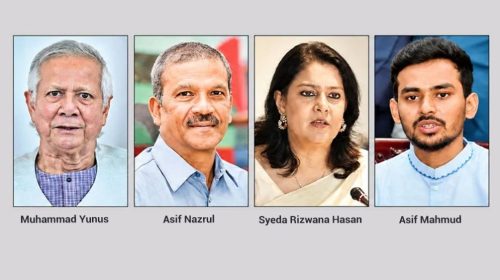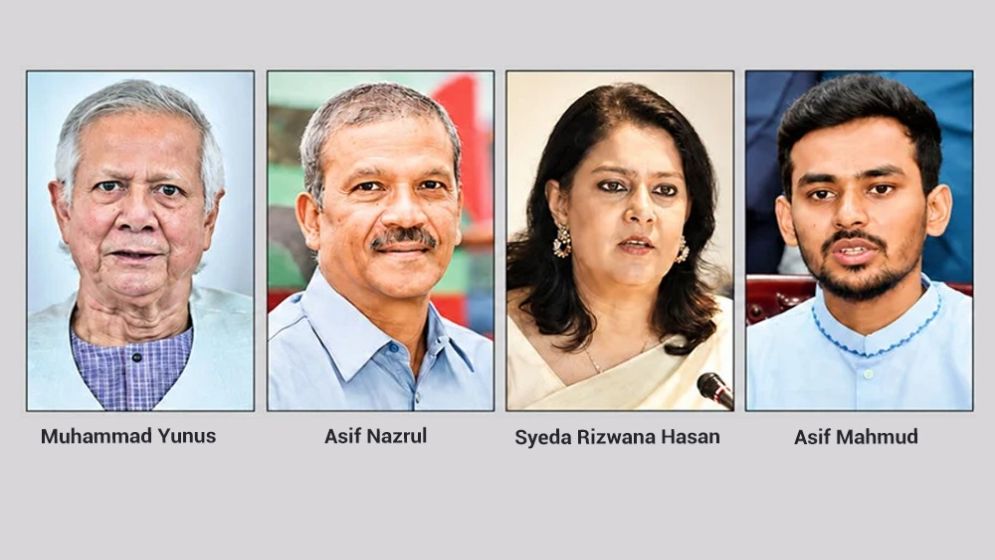
At long last, the Anti-Corruption Commission (ACC) has launched a formal investigation against Asif Mahmud Shojib Bhuyain, an influential student advisor in the Yunus government. ACC Deputy Director Akhtarul Islam disclosed this information during a press conference on Wednesday.
According to the allegations, Asif Mahmud engaged in widespread corruption regarding appointments, transfers, and promotions while serving as the Advisor to the Ministry of Youth and Sports. It is alleged that he received BDT 7.6 million in exchange for issuing new posting orders after removing 38 Upazila Youth Development Officers under the ministry from their positions. The complaint further states that BDT 15 million was taken for the promotion of 150 Assistant Upazila Youth Development Officers, and an additional BDT 20 million was collected to ensure their desired postings after promotion.
This marks the first time the ACC has initiated an inquiry into corruption charges against an advisor in the interim government. However, compared to the total scale of Asif Mahmud’s corrupt activities, the allegations within the Ministry of Youth and Sports represent only a small fraction. The general public expects an investigation into the larger corruption schemes involving this young advisor. A key witness to Asif Mahmud’s corruption is his friend and former Assistant Private Secretary, Moazzem Hossain. Moazzem was removed from his post in April 2025 via a notification from the Ministry of Public Administration. Although an investigation into his corrupt activities began, no visible progress has been made so far. Those close to Asif Mahmud report that Moazzem remains on close terms with him, and taking Moazzem into remand for questioning would yield vital information regarding Asif Mahmud’s illicit wealth.
Asif Mahmud is far from an isolated case; during the year and a half of the Yunus government, its advisors engaged in a spree of corruption. A competition effectively broke out among Yunus’s advisors to loot national resources and siphon them abroad. Just as Yunus was the Chief Advisor, he stood out as the chief figure in corruption as well, personally instructing other advisors on how to embezzle funds and launder money overseas. Over the past eighteen months, all historical records of corruption in Bangladesh have been shattered. Therefore, investigating Asif Mahmud alone will not suffice; the public expects a thorough investigation into the corruption charges against everyone, including Yunus.
Asif Mahmud’s Primary Corruption Schemes Remain Uninvestigated
Asif Mahmud served as the “poster boy” of corruption for the Yunus administration. Over the past year and a half, rather than proving his competence through positive contributions as an advisor, he gained notoriety as a figurehead for financial misconduct. His name repeatedly surfaced due to allegations of corruption, irregularities, and abuse of power. As a result, Asif Mahmud Shojib Bhuyain transitioned from a student leader into a controversial and corrupt figure.
According to ACC sources, 11 separate corruption complaints were lodged against Asif Mahmud between February and July of this year. These complaints detail the following:
• Corruption in Development Projects: Allegations state that during his tenure as the Advisor to the Ministry of Local Government, Asif Mahmud embezzled funds from various development projects. The complaints claim that 25% of any project allocation under the ministry had to be paid directly to the advisor before funds could be released. It is further alleged that his press secretary, Mahfuz Alam, personally supervised the collection of these commissions.
• Bribery Allegations in WASA MD Appointment: Toward the end of the interim government’s term, Abdus Salam was appointed Managing Director of Dhaka WASA through a controversial process. Prior to this, he served as the agency’s Additional Chief Engineer, during which he faced various corruption charges. Salam, who owns property in Canada, allegedly paid the advisor BDT 100 million to secure the position. The complaint asserts that BDT 80 million was transferred through Al Ansari Exchange in Dubai, while the remaining BDT 20 million was paid in cash.
• Bribery in North City Corporation Administrator Appointment: On February 12, 2025, the interim government appointed Mohammad Ejaz as the Administrator of Dhaka North City Corporation (DNCC) for a one-year term. The complaint states that the appointment was finalized following a financial transaction with Asif Mahmud, involving BDT 200 million in cash alongside a mandatory 10% commission on all City Corporation operations. Driven by the need to recover these bribe costs, Ejaz acted with impunity, leading to his eventual removal amid mounting corruption charges. The ACC has received reports of corrupt practices involving the Mirpur Gabtoli cattle market lease, the e-rickshaw project, shares in the Borak Tower / Hotel Sheraton development, shop allocations in Banani kitchen market, parking lot conversions in Khilgaon Taltola Super Market, city van services, and street vendor allocations. Associates of Ejaz state that his actions were driven by the demand to generate funds for Asif Mahmud.
• Tender Trade: Written complaints submitted to the ACC indicate that following Asif Mahmud’s assumption of leadership at the Local Government Ministry, tenders worth approximately BDT 35 billion were settled. Asif Mahmud allegedly collected kickbacks ranging between 10% and 30% on every tender, with his press secretary intervening in each process to finalize transactions before work orders were issued. An audio recording documenting these interactions was attached to the complaint.
• Posting Trade: Several written complaints document direct interference by Asif Mahmud in public administration from August 2024 until his departure. He issued 48 Do Letters (Demi-Official letters) for Deputy Commissioner (DC) appointments across the country, resulting in 36 of his recommended candidates securing DC posts. The complaints allege that illicit transactions ranging from BDT 20 million to BDT 100 million took place per district, depending on the location. Furthermore, government officials regularly lobbied Asif Mahmud for promotions to key departments, major projects, and Secretary-level posts, with lobbying commencing only after substantial financial arrangements were finalized.
• Cryptocurrency Controversy: A public outcry ensued after Asif Mahmud disclosed his bank account details during a press conference, with critics pointing out that illicit funds are rarely kept in standard bank accounts. Reports from multiple sources indicate that the majority of Asif Mahmud’s wealth was converted into cryptocurrency. Additionally, he reportedly acquired assets and made investments in Dubai, while maintaining accounts in Swiss banks. Asif Mahmud visited Switzerland at least three times after becoming an advisor. According to the annual report of the Swiss National Bank (SNB), funds deposited by Bangladeshi nationals in Swiss banks increased by approximately 41% over the course of a single year. By 2025, total Bangladeshi deposits reached 834.1 million Swiss Francs, up from nearly 500 million Swiss Francs in 2024. These figures leave little doubt that money was illicitly transferred abroad by Asif Mahmud and other advisors in the Yunus administration.
Will the Chief Corruption Figure, Yunus, Escape Investigation?
Yunus engaged in the most extensive corruption during this 18-month period, facing allegations of looting thousands of millions of Taka and laundering the proceeds overseas. A recent investigation revealed that during his tenure as Chief Advisor, Bangladesh made a new investment of at least BDT 1.5 billion in the Crédit Agricole Grameen Foundation in France. Established in 2008 as a joint venture between Bangladesh’s Grameen Bank and the French banking group Crédit Agricole, the international entity is headquartered in Montrouge, France. Funds were transferred into this entity owned by Yunus between December 2024 and June 2025 without authorization from Bangladesh Bank, and no official record exists of these funds being transmitted through legal banking channels.
Furthermore, during his time as Chief Advisor, investments in Grameen America grew by BDT 1.2 billion, a figure confirmed by data obtained from the organization’s headquarters in New York. Founded by Yunus in 2008, Grameen America has disbursed USD 230 million in loans and holds net assets exceeding USD 10 billion. Yunus maintains various investments across at least ten countries, all of which experienced significant new capital inflows during his tenure as head of the government. Determining whether these funds were illicitly acquired and laundered requires a formal investigation.
Upon assuming office, Dr. Yunus openly pursued decisions benefiting his enterprises. Grameen-related entities began receiving government approvals, tax exemptions, and regulatory concessions. Among these was the approval for a private institution named “Grameen University” in Dhaka, a manpower export license for Grameen Employment Services, and permission to launch a digital wallet under Grameen Telecom. Furthermore, Grameen Bank received tax exemptions, and the government’s shareholding in the bank was reduced from 25% down to 10%. Meanwhile, labor law violation and money laundering cases against Dr. Yunus and his associates were swiftly dismissed, raising serious questions about judicial transparency. The public expects the Anti-Corruption Commission to investigate whether these privileges complied with the law.
Asif Nazrul’s Role in Financial Irregularities
During Asif Nazrul’s 18-month tenure, one of the most widely discussed corruption issues involved the transfer of Sub-Registrars. Over this period, bribe transactions within the Ministry of Law concerning Sub-Registrar transfers reached BDT 1 billion. Established transfer policies were routinely bypassed under Law Advisor Asif Nazrul. Evidence indicates that transfer orders were canceled when promised bribe payments failed to materialize. In certain instances, individual officers were transferred three to four times within six to seven months. Out of 403 Sub-Registrars in the Directorate of Registration, at least 282 were transferred within 18 months, with at least 200 obtaining favorable postings through bribery. Complaints indicate that bribes as high as BDT 100 million were demanded for prime locations, while standard transfers cost between BDT 5 million and BDT 6 million per person—an unprecedented volume of transfers for an eight-month window.
In June of last year, an unprecedented event occurred in the subordinate courts of Bangladesh. On June 2, 252 judges across the country were transferred simultaneously. The Ministry of Law, Justice and Parliamentary Affairs issued five separate notifications to this effect, sparking widespread concern as sweeping transfers executed without consulting the Supreme Court represented a direct interference in judicial independence. The notifications instructed 30 District and Sessions Judges, 38 Additional District and Sessions Judges, 22 Joint District and Sessions Judges, and 162 Senior Assistant and Assistant Judges to hand over their responsibilities immediately and report to their new stations. Investigations suggest this mass transfer was driven by a syndicate led by Asif Nazrul to generate funds through judicial reassignments, netting hundreds of millions of Taka.
Additionally, allegations indicate that Asif Nazrul facilitated bail for numerous accused individuals in exchange for money, embezzling hundreds of millions of Taka through these transactions.
Following the interim government’s assumption of power, Asif Nazrul emerged as its second most powerful official, holding authority subordinate only to the Chief Advisor. He influenced several major executive decisions, including the contractual appointment of former Public Administration Secretary Mokhlesur Rahman. Following his appointment, Mokhlesur initiated widespread DC appointments across the country, leading to allegations of extensive bribery. Although an investigation committee was formed to review these irregularities, Asif Nazrul exercised primary control over it, ultimately clearing Mokhlesur of charges through a mutual arrangement in exchange for nominating his own candidates for DC positions. Conflict arose when both Asif Nazrul and Student Advisor Asif Mahmud submitted competing candidates for the post of DC in Chattogram after receiving financial considerations from their respective nominees. Once these transactions became public knowledge, Mokhlesur Rahman was removed from the Ministry of Public Administration. Asif Nazrul is also alleged to have generated millions of Taka through the posting of various government secretaries.
In addition to the Ministry of Law, Asif Nazrul served as the Advisor to the Ministry of Expatriates’ Welfare and Overseas Employment, where similar financial irregularities occurred. Upon taking charge, he initiated the issuance of new recruiting agency licenses, allegedly netting hundreds of millions of Taka.
In 2025, expatriate workers sent over USD 135 billion in remittances to neighboring India, whereas Bangladesh received USD 31 billion. India maintains 1,988 active recruiting agencies for manpower exports. By contrast, data from the Bureau of Manpower, Employment and Training (BMET) indicates that Bangladesh has 2,646 active recruiting agencies—the highest concentration in South Asia and disproportionately high compared to major global labor exporters. Under the Yunus administration, the Ministry of Expatriates’ Welfare approved licenses for an additional 252 recruiting entities, largely driven by Asif Nazrul’s directives.
Reports also suggest that Asif Nazrul laundered substantial assets to the United States, acquiring multiple properties and business enterprises there. The public anticipates that the Anti-Corruption Commission will investigate these allegations thoroughly.
Rizwana and Her Spouse as Custodians of Illicit Wealth
Another prominent figure facing corruption charges in the Yunus government is Syeda Rizwana Hasan. Her husband, Abu Bakar Siddique (AB Siddique), was employed by an enterprise owned by former State Minister for Power and Energy Nasrul Hamid Bipu. Through this association, Rizwana and her husband allegedly acted as custodians of Bipu’s illicit assets, with her husband collecting funds on her behalf. Over an 18-month period, the couple reportedly embezzled hundreds of millions of Taka through lobbying and corrupt practices across various sectors, including environmental governance.
Prior to assuming her advisory post, Syeda Rizwana Hasan stated publicly that they owned no substantial property. However, their assets have grown rapidly since, drawing public scrutiny. Given AB Siddique’s longstanding connection as a school classmate of Nasrul Hamid Bipu and his employment at Hamid Fashion, he allegedly facilitated the purchase and sale of various properties belonging to Bipu after August 2024, with reports indicating that portion of these funds were transferred abroad.
Corruption allegations extend across the advisors of the Yunus government, with specific written complaints submitted to the ACC against Mostofa Sarwar Farooki, Nurjahan Begum, and Adilur Rahman Khan.
The public expects the Anti-Corruption Commission to investigate all of these claims impartially. The initiation of an inquiry into Asif Mahmud represents a positive first step, and a comprehensive, unbiased investigation into all corruption that occurred under the Yunus administration will mark a significant step forward in Bangladesh’s anti-corruption efforts.
Audite Karim is a writer and playwright.
Email: auditekarim@gmail.com
Comment
Design & Developed by: BD IT HOST


 |
5 Septembertember, 2026
|
5 Septembertember, 2026