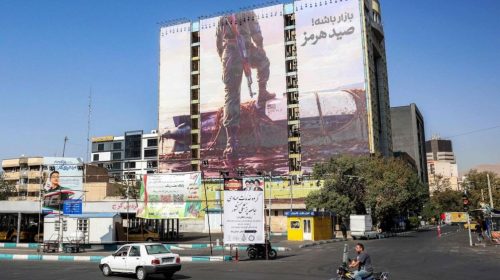
Kurdistan resident Ahmed Faraj was just a child when his city became a battlefield in the Iran-Iraq conflict. Decades later, with the Middle East at war, he fears his home might be drawn in again.
For months, drones and missiles have buzzed over his lush green hometown of Penjwen bordering Iran, as the Islamic republic and the United States fight a war that has engulfed most of the region.
Iran and its allied Iraqi armed factions have intensified attacks on bases hosting US troops, as well as against Iranian Kurdish opposition groups, whose fighters have long sought refuge in Kurdistan’s mountains.
While the initial violence has largely subsided, Faraj worries that if fighting resumes, the conflict could escalate, putting his city at risk because “in war, borders no longer exist”.
“I clearly remember Penjwen’s destruction,” the 57-year-old told AFP as he sipped his tea at one of the city’s busiest markets.
Led by Saddam Hussein, Iraq attacked neighbouring Iran in September 1980, triggering an eight-year war that is estimated to have killed hundreds of thousands of people on both sides.
Faraj said one of his sharpest memories was from a year later, when Iran attacked his hometown, resulting in “dozens of civilian casualties”.
Eventually, once Penjwen was deserted, “the Iraqi regime demolished the town itself, flattening all the houses with TNT and bulldozers so that Iranian forces couldn’t enter and establish a base there”, he added.
Haunted by a memory
Between 1987 and 1988, Saddam’s government carried out the “Anfal Operation” that is thought to have killed around 180,000 Kurds.
Following a US-led invasion of Iraq, Saddam was toppled in 2003 and hanged three years later, putting an end to Iraqi proceedings against him on charges of genocide over the Anfal campaign.
Former parliamentarian Abdul Rahman Ali Reda was also a child when the war broke out, and one incident still haunts him: when Iraqi forces burned down his family home on a hill in Penjwen.
“That sight has never left me,” he said, now 53 years old.
“Homes, schools, government offices and religious sites were all levelled to the ground, and even after all these years, many houses remain in ruins and have never been rebuilt,” Reda told AFP.
He believes border-area residents suffer the most in wars, and these days they must always be prepared “for any potential disaster”.
Iraqi Kurdistan is home to thousands of Iranian Kurds opposed to the Islamic republic, including militant groups that have long had bases there.
These groups have also maintained a clandestine presence in Kurdish-majority western Iran.
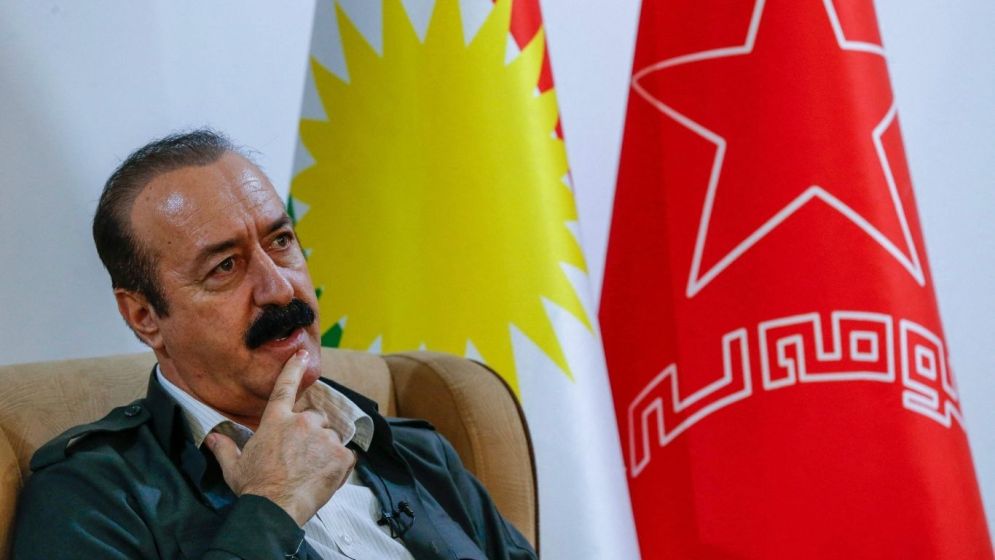
Among them is the Komala party, founded in 1969 by students and intellectuals in Tehran and Kurdish cities. Iranian drones and missiles have repeatedly hit its fighters in the ongoing war.
Not our war
Party member Idriss Kolahduzi told AFP that Tehran has dispatched reinforcements to predominantly Kurdish regions in Iran, including the border with Iraqi Kurdistan, in recent months.
“Kurds don’t have factories or plants, they rely mostly on agriculture in border regions,” he said, warning that additional military deployment would only “burden” them.
Kolahduzi said he believes “Iran fears a potential uprising” in Kurdish areas.
At the start of the Middle East war, media reports suggested that Iranian Kurdish groups might collaborate with the United States.
Several of the groups, however, said they were waiting for an uprising in Iran before they would cross the border and attempt to overthrow the government.
Tehran threatened to target “all facilities” in Iraqi Kurdistan if militants crossed into Iran.
Penjwen resident Omid Hassan told AFP that “the sound of any plane or missile overhead brings back the times when the city was a front-line battlefield in the Iran-Iraq war”.
It “fills me with worry and sorrow”, the 57-year-old said.
At a local cafe, Hadi Abdullah, a civil servant wearing traditional Kurdish shalwar, said his greatest concern was the economic fallout from the war, as prices climb and the Iraqi dinar fluctuates.
“This is not our war, and we should not be dragged into it,” the 56-year-old told AFP.
Comment
Design & Developed by: BD IT HOST


 |
27 Septembertember, 2026
|
27 Septembertember, 2026