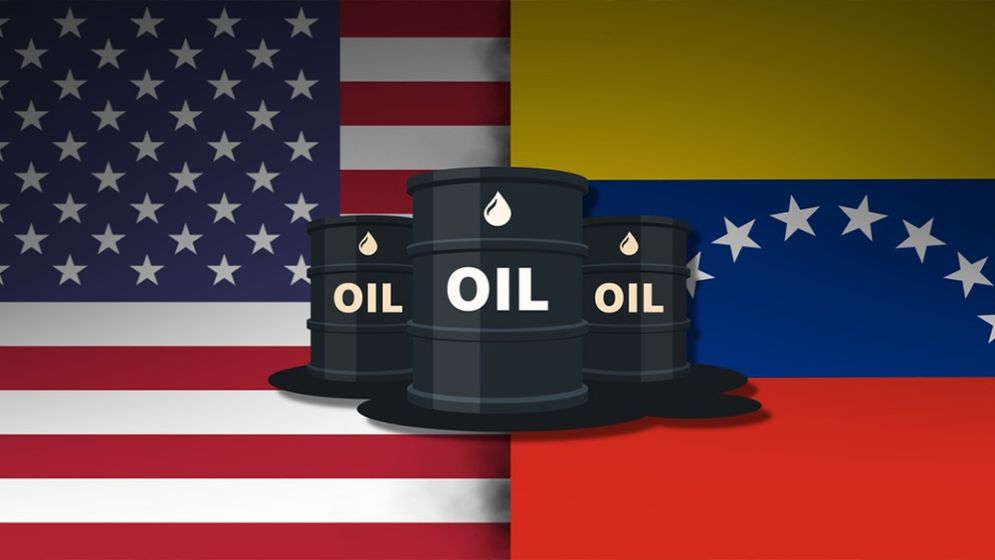
The United States and Venezuela have signed a massive oil agreement granting a US-led company 100-year concessions over 17 Venezuelan oilfields containing an estimated 65 billion barrels of crude, a deal hailed by both governments but criticised by analysts and political opponents as heavily tilted in Washington’s favour.
The agreement, signed in Caracas on Wednesday, marks a major step in President Donald Trump’s efforts to secure greater control over Venezuela’s vast oil resources.
Trump had made his intentions clear after elite US troops swooped into Nicolás Maduro’s compound in Caracas and forcibly removed him from power in January. At the time, he said the United States would “run” Venezuela and manage the sale of Venezuelan oil for the foreseeable future.
The 17 oilfields covered by the new agreement account for more than a fifth of Venezuela’s proven oil reserves, making it one of the most significant energy agreements involving the two countries.
Trump described the pact as “the biggest oil deal in world history”, while Venezuela’s interim President Delcy Rodríguez called it “historic”, saying it would generate $100 billion in investment and more than $200 billion in tax revenue.
However, the deal has drawn sharp criticism.
“This is a terrible deal. [Rodríguez] has given away 20% of the national patrimony for nothing,” said Elliott Abrams, Trump’s former special representative for Venezuela and Iran.
“I think she is simply complying with the demands she’s getting from Washington,” he added.
A White House fact sheet released on Tuesday outlined some of the framework of the agreement. Under the plan, the US government will work with North American Blue Energy Partners (Nabep), a private company described as Venezuela’s second-largest private oil producer after Chevron.
The arrangement also gives Washington significant influence over Nabep. The US government will have veto power over the appointment of members of the company’s board of directors, while a majority of the board must be US citizens.
The deal comes at a time when the ongoing US war with Iran has pushed up petrol prices, raising hopes in Washington that increased oil production outside the Middle East could help stabilise global energy supplies and ease pressure on consumers.
US Interior Secretary Doug Burgum said the agreement was “shifting the geopolitical centre of the global energy markets” away from Middle Eastern “choke points” and towards the Western Hemisphere.
Abrams acknowledged that closer energy cooperation between the United States and Venezuela made strategic sense at a time of uncertainty over Gulf oil supplies. However, he argued that the terms of the agreement were so one-sided that they resembled “a kind of fever dream of what colonialism looks like”.
The White House has also said the agreement has “re-established the Monroe Doctrine”, describing it as a move to remove foreign influence from South America and reinforce US dominance in the Western Hemisphere.
Despite assurances from both governments that the agreement will benefit Venezuelans and Americans, major questions remain over its implementation and economic viability.
Trump has said the deal could generate profits within two or three years. Energy experts, however, have warned that the severely weakened state of Venezuela’s oil sector means restoring production could take much longer.
Luis Pacheco of the Baker Institute at Rice University said Venezuela would need to invest around $100 billion over eight years to restore oil production to levels seen three decades ago.
“It’s important to know who will manage those resources and for what purpose,” Pacheco said, raising concerns over the management of the country’s oil wealth.
Venezuela’s opposition has also expressed concern that the agreement could strengthen Trump’s relationship with Rodríguez, whom opposition figures accuse of leading the same political system previously headed by Maduro.
The Trump administration had earlier denounced Maduro’s government as a corrupt drug cartel and dramatically increased US military pressure on Venezuela, setting the stage for the dramatic political and economic realignment now unfolding in the oil-rich South American nation.
Comment
Design & Developed by: BD IT HOST


 |
3 Septembertember, 2026
|
3 Septembertember, 2026