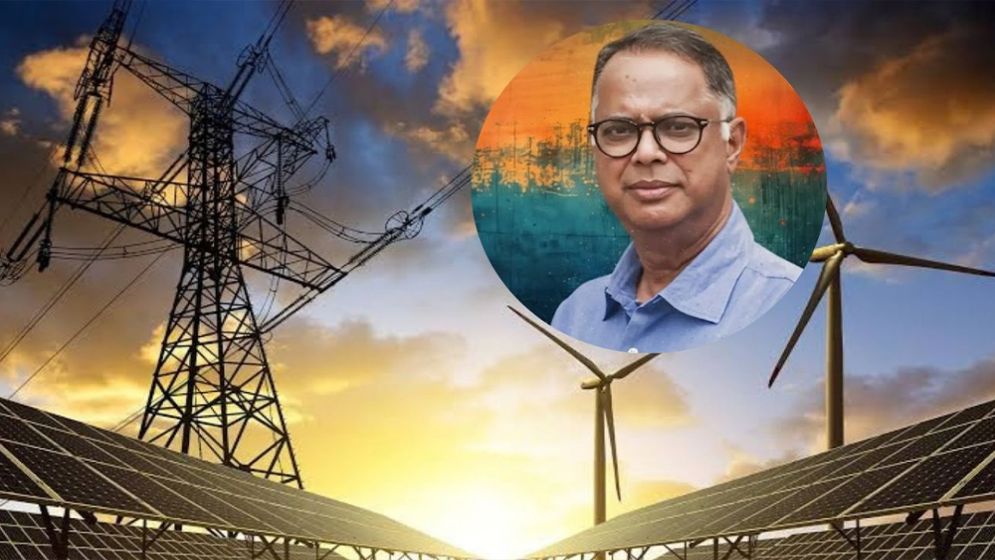
The country’s electricity and energy situation is gradually improving, with gas supplies increasing and load-shedding declining significantly in recent days. The improvement is bringing growing relief to consumers and businesses.
Prime Minister Tarique Rahman is firmly addressing the complex situation created by various global factors in the energy sector. Under his far-sighted decisions and directives, Power, Energy and Mineral Resources Minister Iqbal Hasan Mahmood Tuku is working tirelessly to bring the overall situation under control.
The prime minister himself is closely monitoring the electricity and energy crisis, treating it as a priority. Meanwhile, as the head of the ministry, the energy minister is efficiently leading efforts to ensure that the benefits of the improvement reach consumers directly. He is now focusing on making the situation sustainable while advancing plans to increase domestic gas production and develop alternative sources of energy in the long term.
According to data from state-run Power Grid Bangladesh PLC (PGCB), load-shedding across the country stood at 174 megawatts at 2pm on Sunday, while it was only 72 megawatts at 11am.
At around 11am, electricity demand stood at 14,452MW against a supply of 14,380MW. At 2pm, demand was 15,017MW, while supply stood at 14,926MW. On the previous day, Saturday, the highest load-shedding over 24 hours was 568MW. Just 10 days earlier, however, load-shedding at different times of the day had reached as high as 2,500MW to 3,000MW.According to Petrobangla data, total gas supply to the national grid stood at 2,619 million cubic feet per day (MMcfd) at 2pm on Sunday. Of this, 1,016MMcfd came from LNG. Two weeks earlier, however, gas supply to the national grid had fallen to around 2,200MMcfd due to a major disruption in LNG supplies. This had triggered a severe crisis among industries, power plants, CNG filling stations and residential consumers.
People familiar with the matter said that amid the energy crisis, steps were taken to quickly identify alternative sources of energy and restore supplies following direct instructions and intervention from Prime Minister Tarique Rahman. In line with the prime minister’s directives, Iqbal Hasan Mahmood Tuku has been coordinating efforts involving the Energy Ministry, Petrobangla, Bangladesh Power Development Board (BPDB) and other relevant agencies.
The energy minister told journalists at the Secretariat on Sunday that the energy crisis would be resolved soon. “Unless there is another accident, there will be no problem with energy supplies in the future,” he said.
He said the Middle East, the main source of oil and gas supplies, had been affected by the Iran-Israel war. “It took some time to find alternative sources under the circumstances. Although we purchased fuel, we could not bring it into the country because of a fire at a floating LNG terminal. Now fuel is arriving properly,” he said.
Iqbal Hasan Mahmud said, “People voted for the government with confidence. But there was some delay due to problems with energy supplies and the accident. Now it has become possible to import energy, and the supply schedule has also been finalised.”
He expressed hope that electricity and energy could be supplied properly in the future if no further accidents occur.
The energy minister said the government had identified alternative sources to ease people’s suffering. “We have brought in gas at a higher price. The problem could be resolved quickly because Prime Minister Tarique Rahman himself intervened in the matter. Everyone concerned worked as a team,” he said.
Multiple Initiatives To Tackle Crisis
The government’s action plan includes three types of measures — immediate, medium-term and long-term.
As uncertainty emerged over LNG supplies from long-term sources, LNG imports from the spot market have been increased despite the higher cost. At the same time, a programme to drill and carry out workovers on 150 wells is being implemented to increase domestic gas production.
The government has also taken initiatives to bring gas from Bhola in compressed natural gas (CNG) form for industrial use, import gas from Myanmar through pipelines and bring gas from Malaysia under the ISO-container system.
Alongside exploring new gas sources, efforts are also being intensified to increase production from existing gas fields.
People familiar with the matter said the government’s goal is not merely to address the current crisis, but also to gradually reduce dependence on costly imports by increasing domestic gas production. At the same time, it aims to keep industrial production running and ensure stability in electricity supplies.
Source : Kaler Kantho
Comment
Design & Developed by: BD IT HOST


 |
28 Septembertember, 2026
|
28 Septembertember, 2026