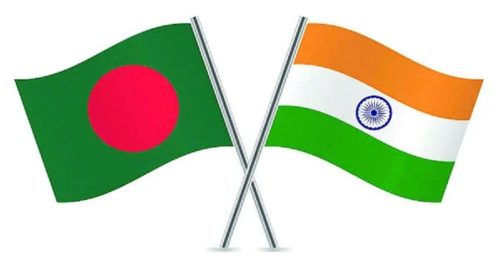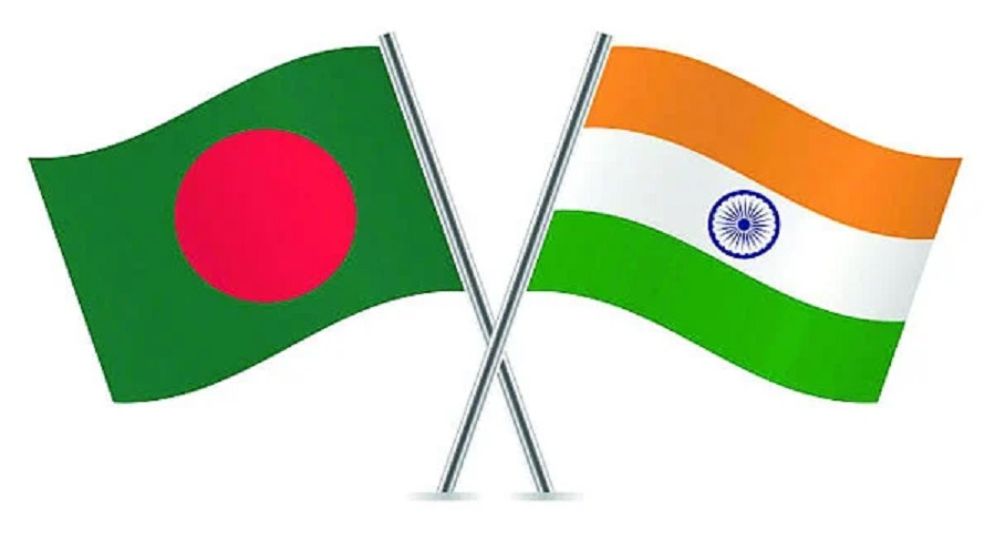
New Delhi appears to be increasingly uncomfortable with former Bangladesh prime minister Sheikh Hasina, who has been living in India since her ouster from power, according to a report published by BBC News Bangla on Thursday.
The report comes amid growing strains in Bangladesh-India relations over Hasina, while The Diplomat has also published an analysis examining how the former prime minister has become a major source of tension between the two neighbours.
According to the BBC report, Indian Foreign Minister S Jaishankar explained at an all-party meeting held at the Parliament House Annexe in New Delhi why and under what circumstances India decided to give shelter to the ousted Bangladeshi prime minister.
India’s stated position since then has been that Hasina was allowed to stay in the country “for the time being” to ensure her security. However, few could have anticipated that the supposedly temporary arrangement would extend to two years or more.
Over the past two years, Indian authorities have repeatedly said publicly that any remarks Hasina has made about Bangladesh’s political situation or the Awami League, as well as any political activities in which she has engaged while in India, were undertaken in her “individual capacity” and had no connection with the Indian government.
However, her participation in a live online press conference hosted by the Foreign Correspondents’ Club (FCC) in New Delhi on 5 August, marking the second anniversary of her ouster, has given the controversy a new dimension.
The Bangladeshi Foreign Ministry issued a strongly worded statement that night, protesting what it described as India’s allowing Hasina to participate in the event.
The language of the statement made clear the extent of Dhaka’s anger.
India has formally maintained that it had no involvement in the press conference and that whatever Hasina said there did not have the approval of the Indian government.
However, according to the BBC report, Bangladesh appears to have concluded that the Indian government permitted Hasina to interact with the media in this manner. Dhaka also appears to believe that Hasina could not have made the statements at the FCC event without at least tacit Indian support.
Whether or not that reflects the actual situation, the BBC report argues that it does not negate the growing discomfort and frustration in India over Hasina’s continued activities.
Why has India not restricted Hasina’s political activities?
The BBC report asks why, despite repeated requests from the Bangladeshi government, India has not imposed restrictions on Hasina’s public statements and political activities.
Senior Indian officials have reportedly told Bangladeshi counterparts in private discussions that Hasina is a state guest, not a political prisoner, and therefore cannot be subjected to such restrictions.
At the same time, there have been increasing signs in recent months that India is seeking a way out of the complicated diplomatic and political situation created by Hasina’s presence in the country.
There is little doubt that Hasina has become one of the main sources of discomfort in Bangladesh-India diplomatic relations.
One of the principal reasons is that she has been sentenced to death by a Bangladeshi court over crimes against humanity, including allegations relating to orders to “kill and eliminate” protesters during the July uprising. The Bangladeshi government has sought her extradition.
India has so far not responded positively to the request, and the issue has cast a shadow over virtually every aspect of bilateral relations, from the Ganges water-sharing treaty to trade restrictions.
Many important Bangladesh-India discussions have remained stalled over the past two years. Both sides have, in their own ways, used the Hasina issue to explain why negotiations have failed to move forward.
As a result, the former prime minister’s presence in India has emerged as one of the major obstacles to restoring normal momentum in Bangladesh-India relations.
Hasina becoming a liability for India?
The BBC report also says there are indications that Indian officials have become frustrated with Hasina’s uncompromising stance and her apparent refusal to acknowledge the changed political reality in Bangladesh.
India has a longstanding policy of providing refuge to trusted foreign partners when they face danger or threats to their lives. The same principle was reportedly applied in Hasina’s case.
The report notes that figures such as the Dalai Lama and the family of former Afghan president Mohammad Najibullah accommodated the expectations of India, their host country.
The situation with Hasina, however, has not worked in quite the same way.
While the Dalai Lama became what the BBC describes as a successful “tool” of Indian foreign policy, Hasina has not fulfilled a similar role.
Instead of becoming an asset, she increasingly appears to have become a liability for New Delhi, according to observers cited in the report.
Regional geopolitical realities have also contributed to India’s growing discomfort over Hasina’s continued presence.
The Diplomat: Bangladesh-India ties at a new crossroads
Meanwhile, The Diplomat has reported that the latest press conference involving Sheikh Hasina has triggered fresh instability in Bangladesh-India relations, leaving the two countries at another critical juncture.
Despite diplomatic warnings from Bangladesh, Hasina participated in the press conference in New Delhi, triggering widespread controversy.
Some Indian journalists have also suggested that the event could not have taken place without at least some degree of approval from the Indian authorities, arguing that it would have been difficult to organise such an event in the Indian capital without official consent.
The event also generated controversy over the participation of Bangladesh cricketer Shakib Al Hasan.
His name had been included in the discussion panel from the outset, and promotional material for the event had been circulated several days earlier. However, at the scheduled time, Shakib was on a cricket field and joined the discussion online.
He was later seen driving home before appearing on video from his residence, prompting questions from some Indian journalists about his commitment to the event.
Dhaka condemns New Delhi event
The BNP-led Bangladeshi government reacted angrily to the statements Hasina made, and to the opportunity she was given to address the media from New Delhi.
The Foreign Ministry said Bangladesh had previously conveyed its concerns to India over the potential impact of such an event on efforts to rebuild bilateral relations.
Despite those warnings, the event went ahead.
Dhaka described it as an affront to Bangladesh’s sovereignty and a “serious insult to the martyrs of the July Revolution”.
Bangladesh has repeatedly asked India to restrict Hasina’s political activities after she made political statements and gave interviews to the media from Indian territory.
Dhaka has also demanded that India return her to Bangladesh to face trial.
New Delhi has yet to respond positively to those requests.
According to The Diplomat, forcibly sending Hasina back to Bangladesh is not a realistic option for India. However, if she were to return voluntarily, it could help ease some of the current tensions between the two countries.
There has also been speculation that India is holding behind-the-scenes discussions with several European countries about arrangements to ensure Hasina’s security if she were to return to Bangladesh.
India’s Ministry of External Affairs has not commented on the speculation.
Comment
Design & Developed by: BD IT HOST


 |
8 Augustust, 2026
|
8 Augustust, 2026