University of Dhaka Vice-Chancellor ABM Obaidul Islam has called upon the nation to work collectively towards establishing peace and harmony by embracing the ideals of National Poet Kazi Nazrul Islam.
He said Nazrul’s life and literary works teach people to stand against injustice and inspire the creation of a non-communal and equitable society.
Prof Obaidul Islam made the remarks while presiding over a memorial meeting held at the poet’s mausoleum on Monday, 25 May, marking the 127th birth anniversary of the National Poet.
The Vice-Chancellor noted that despite numerous hardships and challenges throughout his life, Nazrul never ceased writing and left an enduring legacy across every branch of literature.
Describing Nazrul as “a poet of equality, rebellion, love, peace and truth”, he said scholars, researchers and cultural practitioners must continue to uphold and promote the poet’s philosophy.
Prof Obaidul Islam further observed that Nazrul’s multidimensional consciousness would continue to inspire social transformation for generations to come. He expressed hope that a just, inclusive and non-communal society could be built by following the poet’s ideals.
Among others, Pro-Vice-Chancellor (Education) Abdus Salam, Pro-Vice-Chancellor (Administration) Mohammad Almojaddidi Alfesani and Treasurer M Jahangir Alam Chowdhury addressed the memorial meeting.
Director General of the Bangla Academy and Professor of the Department of Bangla at Dhaka University, Mohammad Azam, delivered the memorial lecture titled “Nazrul: Poet of Protest, Poet of Life.”
The programme was moderated by Chairman of the Department of Bangla, Sirajul Islam, popularly known as Siraj Salekin.
Teachers and students of the Department of Music performed Nazrul songs during the event, creating a solemn and vibrant atmosphere among the audience.
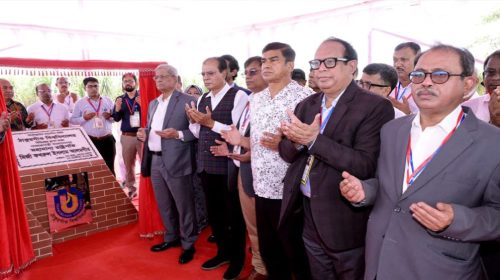
Earlier, as part of the university’s observance of the poet’s birth anniversary, teachers, students, officers and staff gathered at the foot of the Aparajeyo Bangla sculpture under the leadership of the Vice-Chancellor. They then marched in a procession to the poet’s mausoleum, where they paid tribute by laying wreaths and offering prayers.
Comment
Design & Developed by: BD IT HOST


 |
12 Septembertember, 2026
|
12 Septembertember, 2026