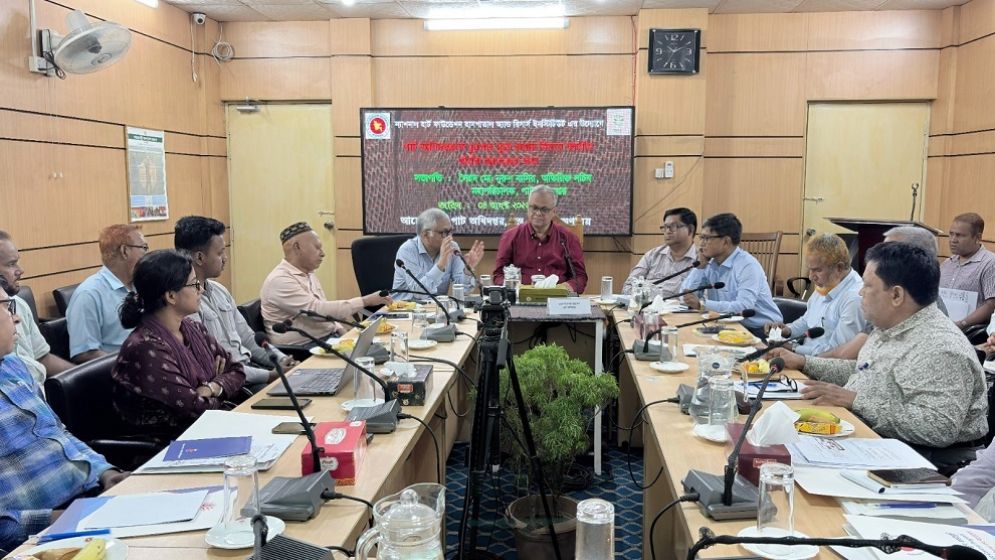
The Department of Jute has announced plans to declare all of its offices 100% tobacco-free in line with the Smoking and Tobacco Products Usage (Control) Act, 2005 (Amended in 2026), reinforcing the government’s efforts to protect public health and eliminate exposure to second-hand smoke in workplaces.
The commitment was announced by Additional Secretary and Director General of the Department of Jute, Syed Md. Nurul Basir, while chairing a discussion on ensuring a tobacco-free environment in departmental offices. The event was organised by the National Heart Foundation of Bangladesh at the Department’s conference room on Tuesday.
As part of the initiative, the Department will issue an official order declaring all offices under its jurisdiction tobacco-free. “No Smoking” signs will also be installed at prominent locations across departmental premises to strengthen compliance with the amended tobacco control law.
During the discussion, representatives of the National Heart Foundation of Bangladesh highlighted the country’s growing tobacco burden, noting that 35.3% of Bangladesh’s adult population uses tobacco, while nearly 200,000 people die each year from tobacco-related diseases, according to the Tobacco Atlas.
The organisation said tobacco use remains a major risk factor for non-communicable diseases (NCDs), including heart disease, cancer, stroke and chronic respiratory illnesses. It added that around 40 million non-smokers in Bangladesh are exposed to second-hand smoke.
The Foundation also pointed to the economic impact of tobacco, saying tobacco consumption and production resulted in an estimated Tk87 crore in health and environmental losses in 2024, compared with Tk41 crore in government revenue generated from tobacco.
Addressing the event, Professor Dr Sohel Reza Choudhury, Head of the Department of Epidemiology and Research at the National Heart Foundation Hospital & Research Institute, said Bangladesh could achieve its goal of becoming a tobacco-free country only through effective enforcement of tobacco control laws.
“Making government and private offices, as well as all public places, completely smoke-free will not only protect non-smokers from the harmful effects of second-hand smoke but also encourage tobacco users to quit,” he said.
He added that non-communicable diseases remain the leading cause of premature deaths in Bangladesh, with tobacco use contributing significantly to heart disease, stroke, cancer and diabetes.
“The body begins to recover within 24 hours of quitting smoking, and the risk of heart disease declines significantly within a few years. Establishing 100% tobacco-free workplaces across all government institutions is therefore essential to protect non-smokers and encourage smokers to quit,” he said.
Speaking at the programme, Nurul Basir said the Department of Jute would soon issue formal instructions to implement the initiative.
“Necessary directives will be issued to ensure a tobacco-free working environment, and ‘No Smoking’ signs will be displayed at visible locations in every office,” he said.
He stressed that tobacco harms not only users but also their families, colleagues and future generations.
“Alongside discouraging tobacco use in the workplace, we must strengthen public awareness of its harmful effects. The active participation of all officers and employees will be crucial to the success of this initiative. Ensuring tobacco-free workplaces is vital for protecting both public health and workplace safety,” he added.
Comment
Design & Developed by: BD IT HOST


 |
6 Augustust, 2026
|
6 Augustust, 2026